

Trade shows exist for one essential reason: to create opportunity. They bring together designers, buyers, press, tastemakers, and industry insiders in a single room with the promise that connections made there can elevate brands, spark sales, and generate momentum. That is the theory, at least. In practice, some events appear to forget that visibility is the currency exhibitors are paying for.
Based on our recent experience, MAGIC by Informa fashion event in Nashville delivered a surprisingly frustrating and opaque media process—one that seemed less interested in amplifying its exhibitors and more focused on restricting access to the very tools that help brands grow.
For a modern fashion event, media support should be standard operating procedure: organized press materials, timely releases, exhibitor biographies, approved imagery, and clear points of contact. Instead, what should have been a streamlined editorial workflow became an exercise in delays, vague responses, and missing resources. Requests for a media kit about the event were unmet. Information on participating brands was sparse and unavailable. Contact details for press representatives were withheld under the broad banner of “privacy,” despite the fact that public-facing PR channels are a routine and necessary part of business.
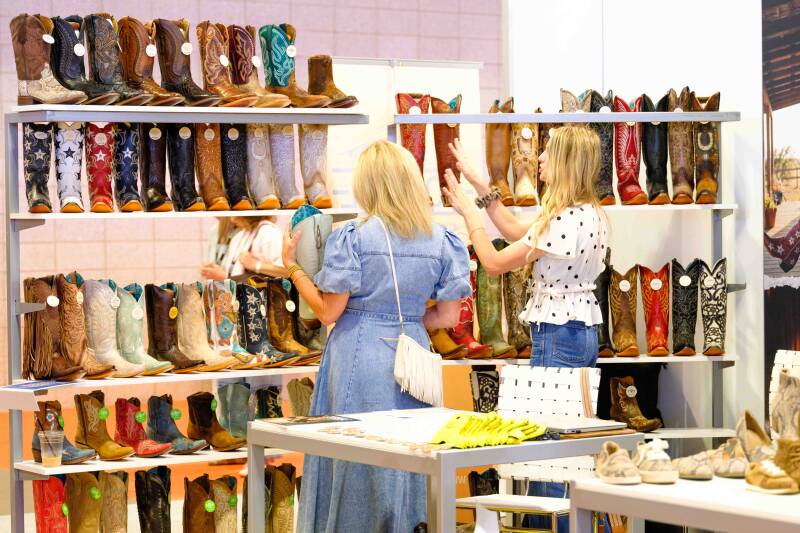
A photograph that was furnished to us by the press office of MAGIC by Informa: we have no idea when it was taken, what it portrays, or who to credit. This photograph supports this story: a classic example of how not to do public relations.
The so-called “MAGIC app,” positioned as the primary tool intended to connect buyers, media, and exhibitors, failed to deliver on its stated purpose. Despite being promoted as a central hub for engagement before, during, and after the event, it was reportedly non-functional throughout key stages of the experience (as of time of press it still fails to work). Similarly, access issues with the MAGIC website login further compounded frustration, limiting the ability of press and industry stakeholders to obtain essential exhibitor information or navigate event resources. The result was a breakdown in connectivity at precisely the moment when seamless access and communication should have been most critical. What did MAGIC by Informa’s press office have to say? Nothing. Silence where there should have been infrastructure, and friction where there should have been flow. When we requested a basic press office contact list for exhibitors—solely to do what the system itself is designed to facilitate: gather media kits, request press releases and collection information, and coordinate interviews directly with participating designers—the response from MAGIC’s press office was simply, “Can you clarify what you mean by a designer press contact list? Due to privacy, we do not share any contact information.” And just like that, this editorial feature was written.
This matters because designers do not exhibit merely to stand in a booth for two days. They invest heavily in these events to be discovered. Exposure from journalists, editors, digital outlets, and industry publications can be just as valuable as wholesale orders. When organizers make it difficult for media to learn who the exhibitors are, obtain assets, or connect with brands, they are not protecting participants—they are limiting them.

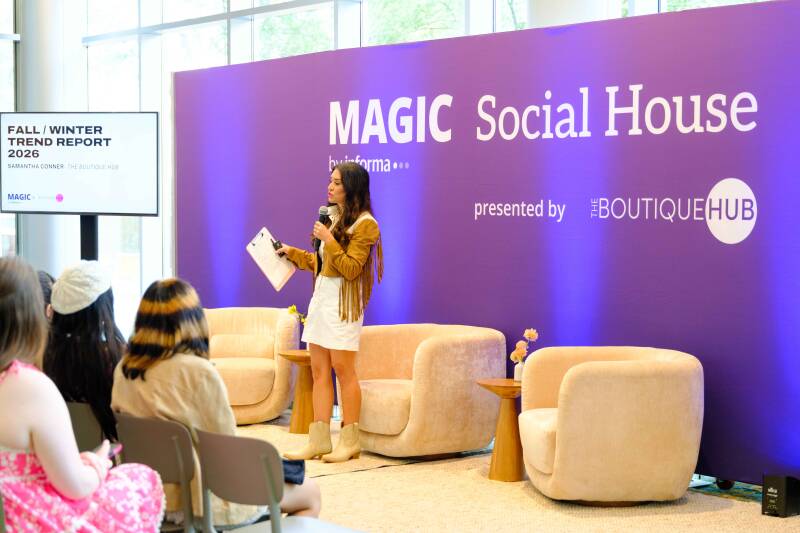
The additional two photographs that were furnished to us by the press office of MAGIC by Informa: we have no idea when it was taken, what it portrays, or who to credit. These photographs support this story: a classic example of how not to do public relations.
The contradiction is hard to ignore. Fashion events market themselves as launchpads for emerging labels, yet some create barriers that prevent coverage from happening efficiently. In an age where every mention, article, image gallery, and social feature can translate into awareness and revenue, suppressing media access feels less like caution and more like self-sabotage.
Even post-event support appeared sluggish, adding to an already fragmented communications experience. Notably, correspondence received from MAGIC’s customer service and press office lacked basic professional identifiers, with emails consistently unsigned and without a named point of contact. In an industry built on relationships and accountability, the absence of clear attribution only deepened the sense of distance between organizers and the media professionals seeking to cover the event accurately and in real time. Rather than having finalized recap materials readily available, outlets were asked to wait days for a release while stories cooled and the news cycle moved on. That is not how effective communications works in 2026. Media windows close quickly, and relevance is measured in hours, not weeks.
What makes this especially disappointing is how this reflects on Nashville itself. The city has become a vibrant crossroads of music, fashion, lifestyle, and entrepreneurship. It deserves a fashion market experience that reflects that energy—one that celebrates exhibitors by making them visible, accessible, and easy to champion.
The brands showing at events like MAGIC Nashville, Las Vegas, and New York, are often talented, ambitious businesses seeking growth. They deserve more than floor space and foot traffic. They deserve professional promotion infrastructure that helps editors tell their stories. Trade shows should be accelerators, not obstacles. If organizers truly want to support designers, they must understand a simple truth: media is not a nuisance to be managed—it is one of the most valuable services an event can offer. YOU ARE THE PRESS OFFICE. DO YOUR JOB. DO BETTER.
A note from the Editor:
“Our internal policy has always been to focus on supportive, positive storytelling—amplifying the work of artists, musicians, designers, and communities in a way that reflects their ambition and creativity. However, there are moments when the responsibility to authentic journalism must take precedence over tone or convenience. When access is restricted, information is withheld, and transparency is compromised, the obligation to report accurately and honestly becomes unavoidable. In those instances, it is not about preference or positioning—it is about integrity, accountability, and the fundamental expectation that media should be allowed to do its job.”